
I see heart attacks every week.
Probably ten or fifteen of them. Small ones. Big ones. First-timers. Repeat offenders.
And you know what I almost never hear?
“I did everything right.”
People will tell me they smoked for 30 years. They’ll admit they haven’t exercised since high school. They’ll shrug and say they knew this was coming.
But they don’t carry guilt the way cancer patients do.
Cancer patients come in with a different energy. Even when they did nothing wrong. Even when there was no lifestyle factor, no family history, no clear reason why their cells decided to turn against them.
They still feel like they failed.
The Double Standard
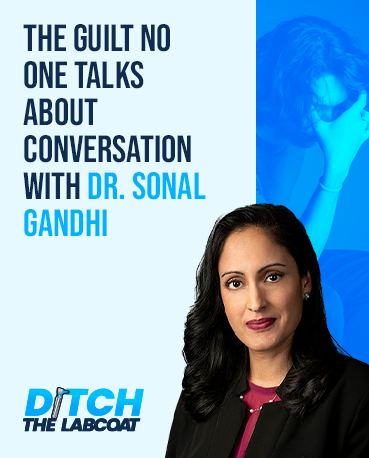
I didn’t notice this pattern until I talked to Dr. Sonal Gandhi, a medical oncologist at Sunnybrook.
She said something that’s been sitting with me ever since:
“People don’t obsess about what they did to themselves when they get heart disease. But with cancer? They sit in that guilt. They ask ‘why did this happen to me?’ in a way that implies they think they caused it.”
And she’s right.
Both conditions are linked to lifestyle. Smoking increases your risk of lung cancer and heart disease. Obesity raises your chances of colon cancer and stroke. Alcohol damages your liver and your cardiovascular system.
Same risk factors. Same preventable elements. But completely different emotional responses.
Why?
The “C Word” Carries Weight
There’s something about cancer that sits in a different space.
Maybe it’s the unpredictability. Heart disease follows patterns. If you have high blood pressure, high cholesterol, and you smoke, a heart attack isn’t surprising.
But cancer? You can do everything right and still get it. Or do everything wrong and never get it.
Sonal told me about patients who come to her and say, “Dr. Gandhi, I ate well. I exercised. I didn’t smoke. And I still got cancer.”
And here’s what she tells them: it isn’t a perfect formula.
You can eliminate every controllable risk factor and still get cancer. Because cancer isn’t just about what you do to yourself. It’s about what your cells are doing as they age, divide, and occasionally make mistakes.
Only 10 to 20 percent of cancers are due to inherited genes. The rest is the complicated interplay between lifestyle, environment, and cellular biology we don’t fully control.
The number one risk factor for cancer? Age.
And we can’t modify that.
Biology Doesn’t Care How Hard You Tried
Every decade you get older, your cells get worse at repairing the mistakes they make as they divide.
That’s not a lifestyle choice. That’s not something you can prevent with kale smoothies or marathon training.
That’s just biology.
And yet, when someone gets cancer, they blame themselves in a way they never would for getting older.
Sonal sees this guilt destroy people. Not the cancer itself. The guilt.
Because they’ve internalized the idea that cancer is something you give yourself. That if you’d just tried harder, been better, made different choices, this wouldn’t have happened.
But that’s not how it works.
Why Heart Disease Gets a Pass
So why don’t heart disease patients carry the same guilt?
I think it’s because we’ve normalized heart disease. It’s common. It’s manageable. We have medications. We have procedures. We put in stents and people go home.
Cancer still feels like a death sentence. Even though it’s not. Even though we cure early-stage cancers at rates approaching 90 to 100 percent.
Even though late-stage cancers are increasingly becoming chronic illnesses people live with, not die from.
Sonal said something I keep coming back to: “We need to pull cancer back into the middle with the menu of other chronic illnesses we manage, not cure.”
Because we don’t cure heart disease. We don’t cure diabetes. We give people treatments so they can live as long as possible with the best quality of life possible.
And that’s exactly what we’re doing with stage four cancers now.
But the emotional weight of the “C word” hasn’t caught up with the reality of treatment.
The Patients Who Never Blame Themselves
Here’s what I notice in the hospital:
The heart attack patient who smoked for 40 years will admit they saw this coming. They’ll say they knew the risks. They might even joke about it.
But they don’t sit there thinking they’re a failure.
The cancer patient who never smoked, who exercised regularly, who did everything their doctor told them to do? They sit there asking what they did wrong.
And there’s no good answer to that question.
Because often, they didn’t do anything wrong. They just got unlucky.
What Sonal Tells Her Patients
When Sonal sees that guilt, she says something simple:
“This isn’t your fault.”
Even if they smoked. Even if they drank. Even if they weren’t the healthiest weight.
Cancer isn’t a one-to-one equation. It’s not a moral judgment on how well you lived your life.
Prevention reduces risk. It doesn’t eliminate it.
And getting cancer doesn’t mean you failed.
What I Learned
I’ve been thinking about this a lot since we recorded the episode.
Why does the guilt around cancer run so deep? Why do we give heart disease patients a pass but hold cancer patients to a different standard?
Maybe it’s because cancer feels more random. More unfair. More like something that shouldn’t have happened.
But randomness is part of biology. Cells make mistakes. Sometimes the immune system catches them. Sometimes it doesn’t.
That’s not a failure. That’s just life.
And maybe if we started talking about cancer the way we talk about heart disease—as a manageable, treatable, sometimes curable condition that’s influenced by lifestyle but not caused by it—people would stop carrying so much guilt.
Because the heaviest part of a cancer diagnosis isn’t always the treatment.
Sometimes it’s the belief that you brought this on yourself.
🎧 Listen to the full conversation with Dr. Sonal Gandhi on Episode 105 of Ditch the Labcoat.