
Often we fail to improve our lives simply because things don’t get bad enough.
As an internist, I see the dramatic moments in medicine every day.
Heart attacks.
Strokes.
Sepsis.
The phone call that changes someone’s life at 2:13 in the afternoon.
Those moments force action.
Nobody ignores crushing chest pain.
Nobody casually shrugs off hearing the word “cancer.”
But medicine is also filled with quieter problems.
The slow-moving ones.
The conditions people adapt to so gradually they almost become part of their identity.
High blood pressure managed with three medications while someone still says, “I’m healthy.”
Prediabetes that becomes diabetes after years of “keeping an eye on it.”
Sleep deprivation normalized as ambition.
Stress accepted as personality.
Burnout worn like a professional badge.
These aren’t dramatic enough to force change.
So people live beside them for years.
That’s what made my recent conversation with medical oncologist Dr. Sonal Gandhi so interesting.
Cancer occupies a completely different emotional category than most chronic diseases.
People fear it instantly.
They confront it instantly.
It cuts through denial faster than almost any diagnosis in medicine.
And yet many of the conditions we collectively normalize:
heart disease, diabetes, obesity, chronic stress, inactivity, poor sleep, alcohol overuse,
quietly shape quality of life for decades and remain statistically far more common.
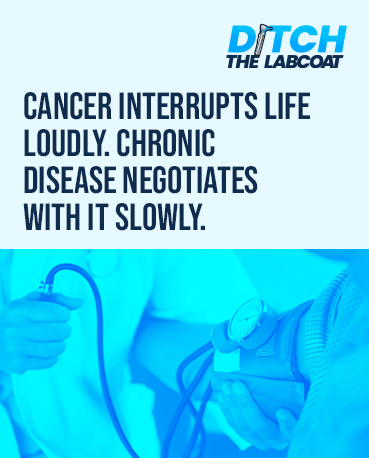
Cancer interrupts life loudly.
Chronic disease negotiates with it slowly.
I sometimes wonder if that’s part of the reason modern healthcare feels so psychologically fragmented.
We respond emotionally to catastrophic threats while quietly adapting to the gradual erosion of our health.
Humans are remarkably good at adapting.
Sometimes too good.
We adapt to exhaustion.
We adapt to poor habits.
We adapt to relationships, jobs, routines, and lifestyles that slowly drain us because the discomfort rarely becomes acute enough to demand immediate action.
Until one day it does.
A heart attack is often not a sudden event.
It’s the final chapter of years of smaller decisions, adaptations, stressors, and normalized warning signs.
Medicine talks a lot about prevention.
But prevention is psychologically difficult because it asks people to take small problems seriously before they become large enough to disrupt life.
That may be one of the hardest asks in all of healthcare.
Not treating disease.
Recognizing the slow-moving versions before they become impossible to ignore.
My conversation with Dr. Gandhi reminded me that fear itself shapes how we experience illness.
But normalization shapes us too.
And sometimes the most dangerous illnesses are the ones we learn to live beside.